Rooted in communities. Built to evolve.

For over three decades, Calcutta Foundation has worked hand in hand with communities, listening to their needs and adapting our approach as they change.

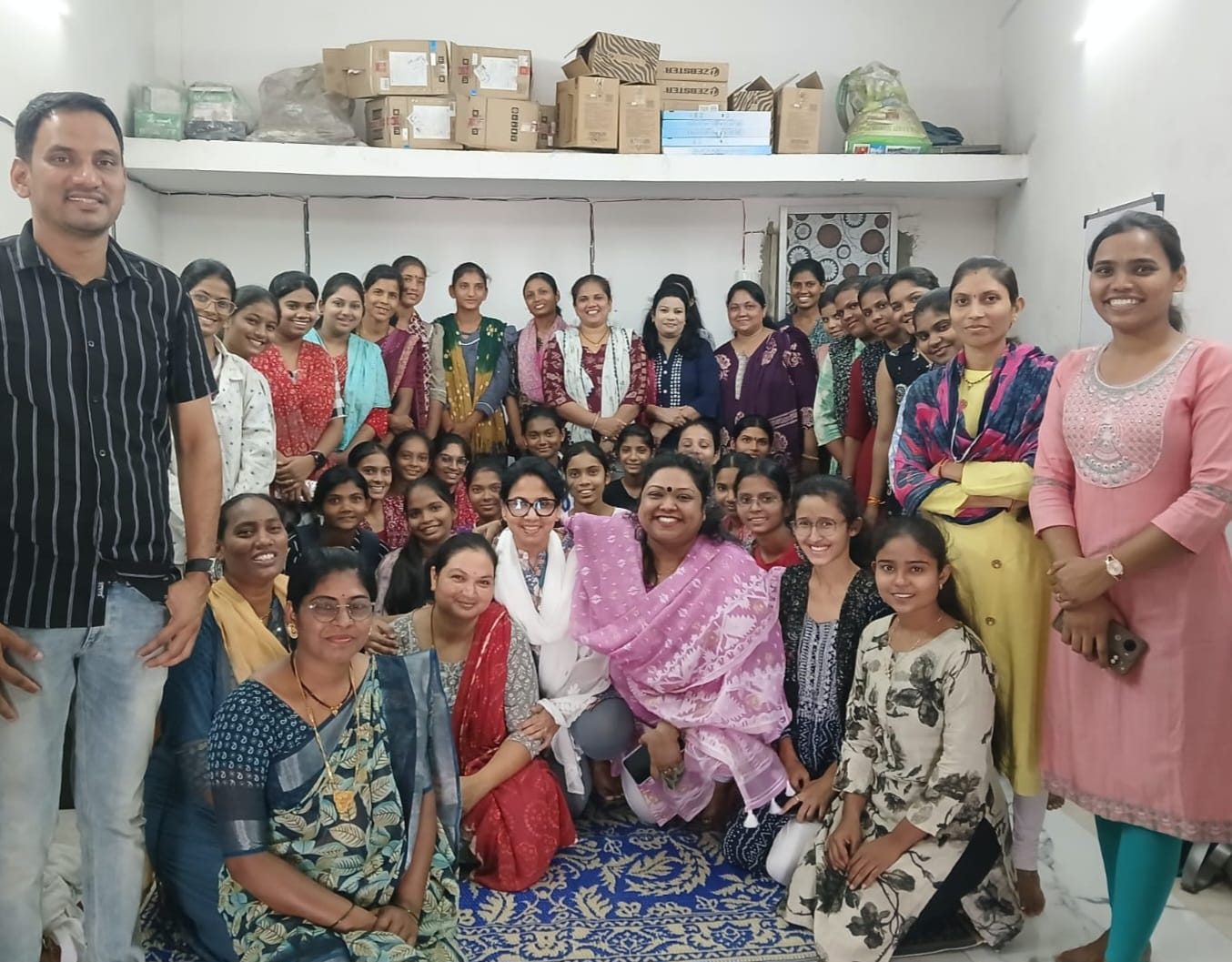
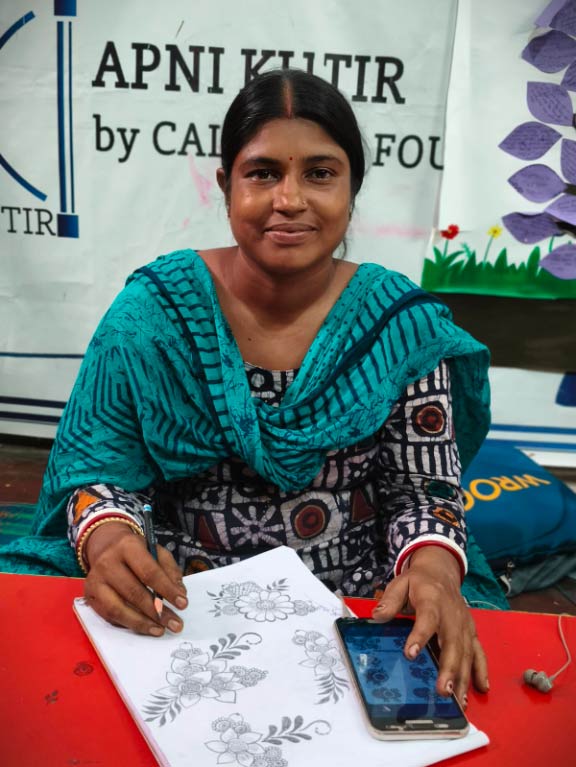
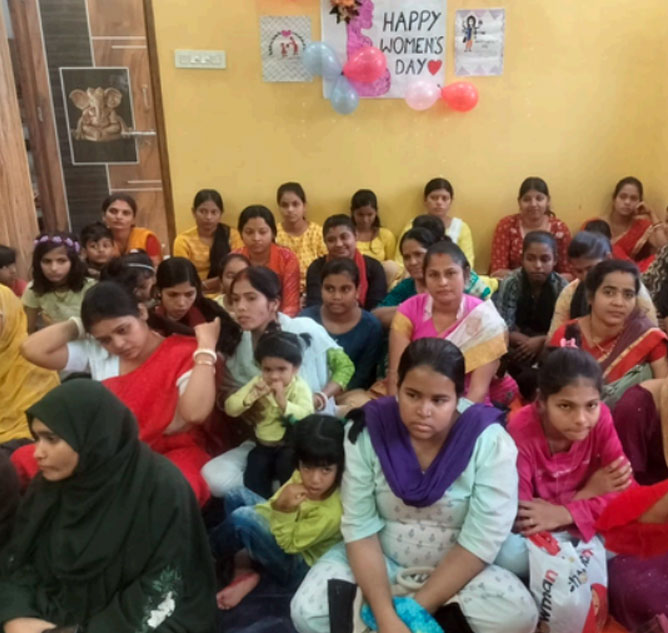
Today, a team of over 150 people works through hyperlocal community hubs and programmes across India, building pathways to livelihoods, healthcare, greater agency and economic independence.

0+

Team Members

0 Years

of Legacy

0

Kutirs
Since 2021

0 States

Current Apni Kutir Presence

Women livelihood training Community development work

Creating safe, local spaces while converting training into confidence, income and long-term agency.

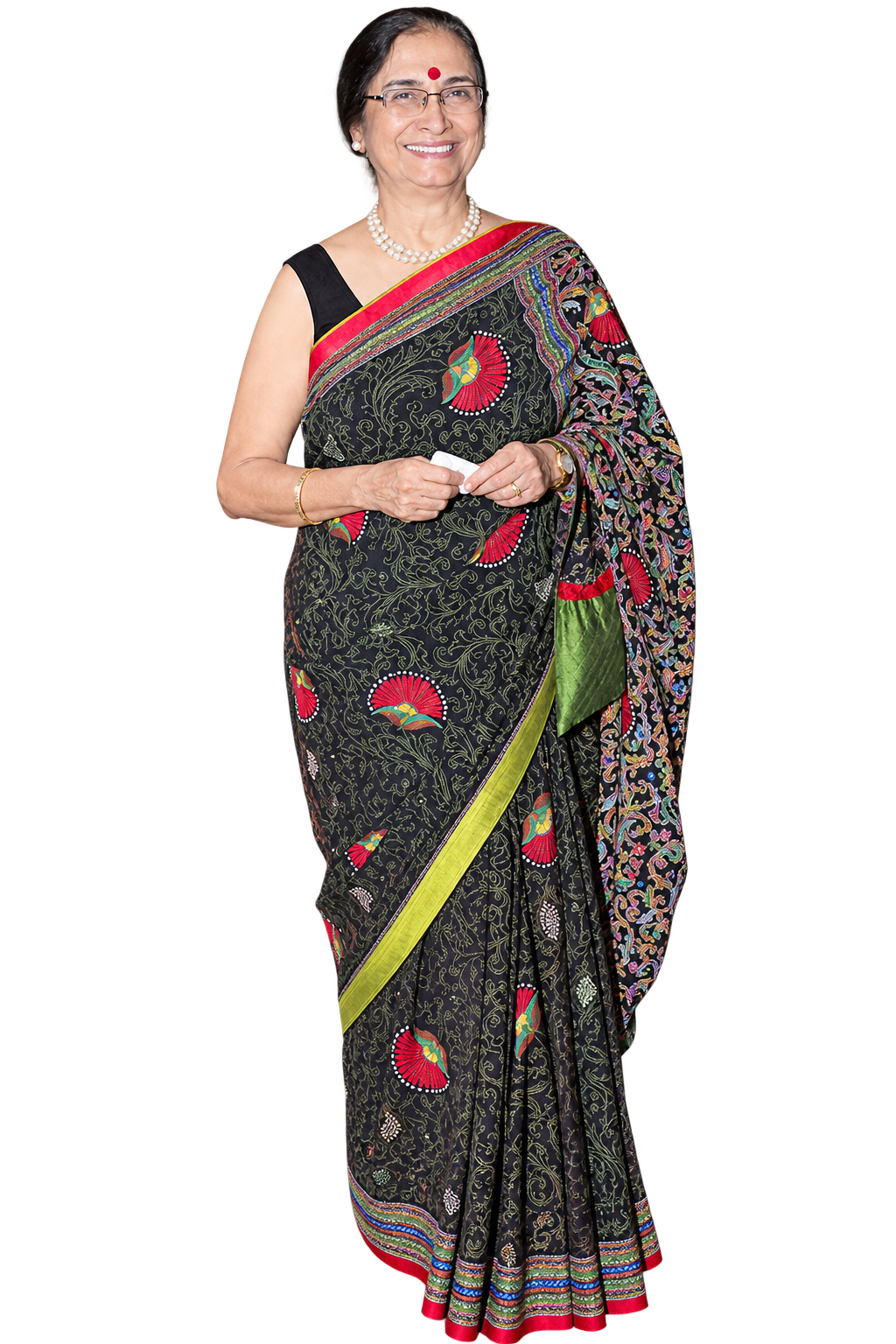
Shamlu Dudeja
Shamlu Dudeja Founder · Calcutta Foundation

The Woman Who Began It

For Shamlu Dudeja, opportunity was never something to be given. It was something to be made possible.

Educator. Mathematician. Author. Philanthropist. Kantha revivalist.

Long before women's economic empowerment became the language of the development sector, Shamlu Dudeja was building it in practice.

Her journey began in classrooms and travelled into the villages of Bengal, where she encountered the extraordinary skill of rural Kantha artisans, and the economic realities that kept their talent largely invisible. What followed was decades of work to bring recognition, dignity and income to women through craft, while carrying Bengal's Kantha tradition to audiences far beyond its place of origin.

In 1994, that same instinct, to see potential where opportunity was missing, led her to establish Calcutta Foundation.

What began with the Calcutta Foundation Orchestra and support for children and underserved communities would grow across education, healthcare, disaster relief, rural development and, ultimately, women's economic empowerment.

The work has changed over the decades. The belief behind it has not:

When people are given access to opportunity, they can change far more than their own lives.
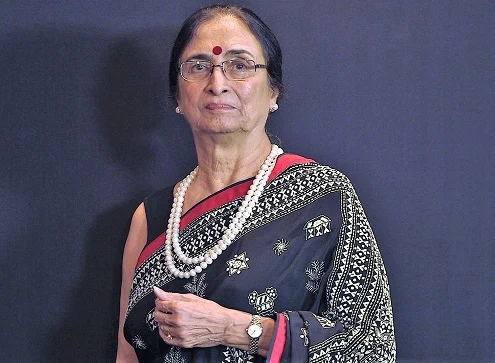
Shamlu Dudeja’s Story, Preserved by Harvard Business School

Kolkata · 2018

Harvard Business School’s Creating Emerging Markets project documents the experiences of business and social leaders whose work has shaped emerging economies.

In her interview, Shamlu Dudeja reflects on her journey from mathematics teacher to social entrepreneur and Kantha revivalist, and on the development of SHE — Self Help Enterprise.

Her work helped bring renewed recognition to Bengal’s traditional Kantha embroidery while creating income opportunities for rural women and connecting their craft with wider markets.

View HBS Interview
Shamlu Dudeja Harvard Business School interview
Harvard Business School Creating Emerging Markets
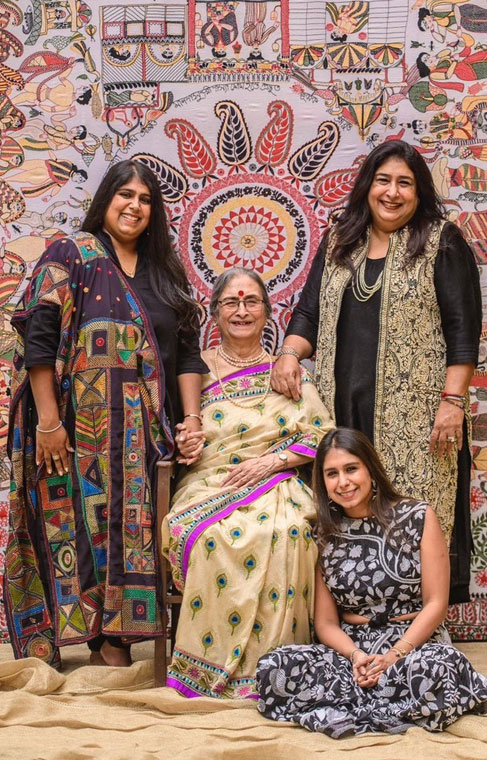
Three generations of Calcutta Foundation

Three Generations. One Vision.

The story behind Calcutta Foundation.

A legacy of women creating opportunities for other women.

Some legacies are inherited. Others are kept alive by the people who choose to continue them.

In 1994, educator, mathematician, philanthropist and Kantha revivalist Shamlu Dudeja founded Calcutta Foundation with a commitment to improving lives through opportunity. Over the decades, the Foundation worked across education, healthcare, relief and community development, responding to the needs it encountered along the way.

Alongside this journey, Shamlu Dudeja’s work with Kantha helped bring new recognition to Bengal’s traditional embroidery while creating livelihood opportunities for rural women. Together with her daughter Malika Varma, this work grew through SHE Kantha (Self Help Enterprise) and its associated efforts to support artisans and take Kantha to wider markets.

Today, the legacy continues across a third generation.

With Malika Varma, Saumya Varma and Mahima Varma, the family’s work continues to evolve across craft, community and women’s economic empowerment. At Calcutta Foundation, this evolution has taken shape through Apni Kutir, a network of hyperlocal community hubs designed around the realities women face today.

Three generations. Different chapters. One enduring belief:

A woman's circumstances should never decide the limits of her future.

Who Are We

Community development

Where Our Journey Began

32 Years of Learning, Growing and Creating Impact.

Every organisation has a beginning. Ours began in 1994 with a simple belief: that access—to education, healthcare, relief, culture and opportunity, could change the course of a life.

So we began where the need was.

Over the years, that took Calcutta Foundation into classrooms, healthcare camps, children's homes, disaster-affected communities and villages across India. We responded to immediate crises, built longer-term programmes and, most importantly, kept listening.

Women community empowerment

How Our Journey Evolved

And the more closely we worked with communities, the clearer one truth became:

Income changes what is possible at home. Confidence changes who speaks. Knowledge changes decisions. Opportunity can travel from a woman to her children, her family and eventually her community.

That understanding shaped the next chapter of our journey.

In 2021, we launched Apni Kutir, our flagship model for women's economic empowerment. Today, our Kutirs are hyperlocal community hubs, spaces embedded within the communities they serve, bringing together livelihoods, healthcare and social empowerment.

We have evolved from responding to barriers one at a time to building ecosystems designed to address how those barriers intersect.

Where We Are Going

01

Our Vision The future we believe in

To create a world where women in India have equal access to economic opportunities, exercise agency over their choices, and contribute to building a just, inclusive and sustainable society.

02

Our Mission How we create change

Our mission is to advance women’s economic independence in India through a holistic, 360-degree approach that combines training and skill development, individual development and community engagement. We establish physical and programmatic centres of learning and support, where women receive vocational training, mentorship and access to enabling services. By building pathways to income generation, financial decision-making and leadership, we aim to equip women to take charge of their lives and achieve their full potential.

A skill can create an opportunity. An ecosystem helps a woman hold on to it.

Core Philosophy - What We Believe

Across India, women continue to encounter barriers that are rarely isolated from one another. Limited livelihood opportunities can exist alongside restricted mobility. Poor access to healthcare can affect a woman's ability to work. A lack of financial knowledge, social support or decision-making power can make even a newly acquired skill difficult to translate into lasting income.

That is why our work goes beyond training.

We build around four interconnected conditions that help women participate more fully in economic and community life:

More Than Just Skills

That is why our work goes beyond training.

01

Equality in Work

Creating pathways for women to access livelihood opportunities, earn and participate in the economy on more equitable terms.

02

Essential Services & Enablers

Bringing skills, healthcare, financial and digital knowledge, and other enabling support closer to the communities where women live.

03

Rights, Voice & Agency

Strengthening awareness, confidence and the ability to participate in decisions that affect one’s own life.

04

Safety & Autonomy

Supporting environments in which women can move, learn, work and grow with greater freedom and security.

And when that change is supported by a community, its effects can travel much further.

At the heart of our work is a simple belief: when a woman gains greater economic agency, she gains more than an income. She gains more room to choose.

32 Years. Many Chapters. One Continuing Journey.

1994

It began with opportunity

Calcutta Foundation is established, with its earliest work growing from the Calcutta Foundation Orchestra.

1998

Education became a pathway

Support for an all-girls residential wing at Udayan expanded opportunities for girls from historically excluded families.

2005 - 2015

When crisis came, we responded

From the Tsunami and Bihar floods to Cyclone Aila and the Nepal earthquake, the Foundation mobilised relief and support for affected communities.

2019

Healthcare moved closer to communities

Project Mayuri brought health interventions to women and children in underserved areas.

2020

A crisis changed the scale of our response

COVID-19 and Cyclone Amphan led to large-scale relief efforts across West Bengal.

2021

Apni Kutir began

A new chapter centred on women's economic independence and community-based empowerment.

2026

From one model to a growing ecosystem

Apni Kutir now works across five states, bringing together livelihoods, healthcare and social empowerment through hyperlocal community hubs.

Our Footprint Has Never Been Defined by One Programme.

Over 32 years, Calcutta Foundation's work has taken different forms in different places.

Sometimes, it has meant building a long-term community institution. Sometimes, responding when disaster strikes. At other times, it has meant healthcare, education, livelihood opportunities or connecting people to new forms of work.

India & Nepal overview — hover or click a country, state or place

Built on trust. Guided by experience. Accountable at every step.

For more than three decades, Calcutta Foundation has been entrusted with communities’ aspirations, partners’ resources and the responsibility of turning both into meaningful change.

We do not take that trust lightly.

Our governance brings together experience in social welfare, education, entrepreneurship, philanthropy, art and community development. The Board provides strategic direction while overseeing programme quality, financial stewardship, statutory compliance, sustainability and the Foundation’s long-term growth.

As our programmes expand, our systems must grow with them. We continue to strengthen the structures that sit behind our work, from audits and statutory reporting to programme monitoring, safeguarding, documentation and grievance redressal.

Good intentions may begin the work. Good governance helps it endure.

Different journeys. A shared responsibility.

Calcutta Foundation’s Board brings together women whose professional lives have been shaped by education, enterprise, social welfare, philanthropy and the arts.

Together, they safeguard the Foundation’s purpose, challenge it to keep learning and help ensure that its growth remains responsible, transparent and grounded in the communities it serves.

SD

Shamlu Dudeja

Founder & Chairperson

Mathematician, author, philanthropist and Kantha revivalist, Shamlu Dudeja has dedicated more than six decades to advancing education, culture and social development. She founded Calcutta Foundation in 1994 with the belief that access to opportunity has the power to transform lives and communities. Through her work, she has championed women's empowerment, supported underserved communities and helped preserve Bengal's Kantha tradition by creating dignified livelihood opportunities for rural artisans. As Chairperson, she continues to guide the Foundation with vision, experience and an unwavering commitment to lasting social change.

MV

Malika Varma

Trustee & Co-Founder

Entrepreneur, educationist and philanthropist, Malika Varma has spent more than three decades working at the intersection of enterprise and social impact. As Co-Founder and Trustee of Calcutta Foundation, she has played an important role in shaping the organisation's strategic direction and strengthening its programmes over the years. Her experience in education, women's livelihoods and philanthropy continues to guide the Foundation's efforts to build meaningful partnerships and create opportunities that lead to lasting community impact.

AM

Archana Mantri

Trustee

An educator and academic leader with over two decades of experience, Archana Mantri brings deep expertise in learning, leadership and institutional development. Her experience as a school principal informs her contribution to the Foundation's strategic planning, programme quality and organisational growth. As a Trustee, she champions continuous learning and helps strengthen initiatives that create meaningful educational and livelihood opportunities for underserved communities.

SA

Supriya Agarwal

Trustee

Art and design consultant Supriya Agarwal brings a creative, community-focused perspective to the Board of Trustees. Her experience in design, stakeholder engagement and community initiatives supports the Foundation's work in communication, partnerships and institutional development. As a Trustee, she contributes to strengthening relationships, enhancing outreach and ensuring that the organisation continues to grow while remaining rooted in its mission and values.

Accountability behind every programme

The work communities see is only one part of an organisation.

Behind every centre, partnership and programme is a wider system of financial controls, statutory reporting, governance oversight, documentation and review. These systems help us use resources responsibly, measure what changes and remain answerable to the people and institutions who place their trust in us.

Registered Public Charitable Trust

Established to undertake activities that improve the lives of underserved communities.

CSR-1 Registered

Eligible to undertake CSR implementation partnerships.

12A Registered

Recognised under the applicable income-tax framework for charitable institutions.

80G Approved

Eligible donations may receive tax benefits subject to applicable provisions.

FCRA Registered

Authorised to receive eligible foreign contributions in accordance with applicable regulations.

NGO Darpan Registered

Registered on the Government of India’s NGO Darpan platform.

What Accountability Looks Like in Practice

Financial Oversight

Audited financial statements, auditor reports, tax filings and statutory documentation are maintained as part of the Foundation’s compliance framework.

Board Governance

The Board provides oversight on strategy, programme quality, compliance, sustainability and organisational growth.

Monitoring, Evaluation & Learning

Programmes are supported through beneficiary records, needs assessments, progress monitoring, impact documentation and reporting.

Safeguarding & Grievance Redressal

Mechanisms are designed to protect participants, promote responsible conduct and provide channels through which concerns can be raised.

Transparent Partner Reporting

Programme and financial progress is documented and shared with partners through agreed reporting and review processes.

Compliance is not a folder of certificates.

It is the everyday practice of being worthy of trust.

That means asking difficult questions, documenting decisions, reviewing outcomes, learning from what did not work and remaining accountable to communities long after a programme begins.

Local Action. Shared Global Goals.

Our work is rooted in local realities while contributing to a wider global agenda for equitable and sustainable development.

scrolltop